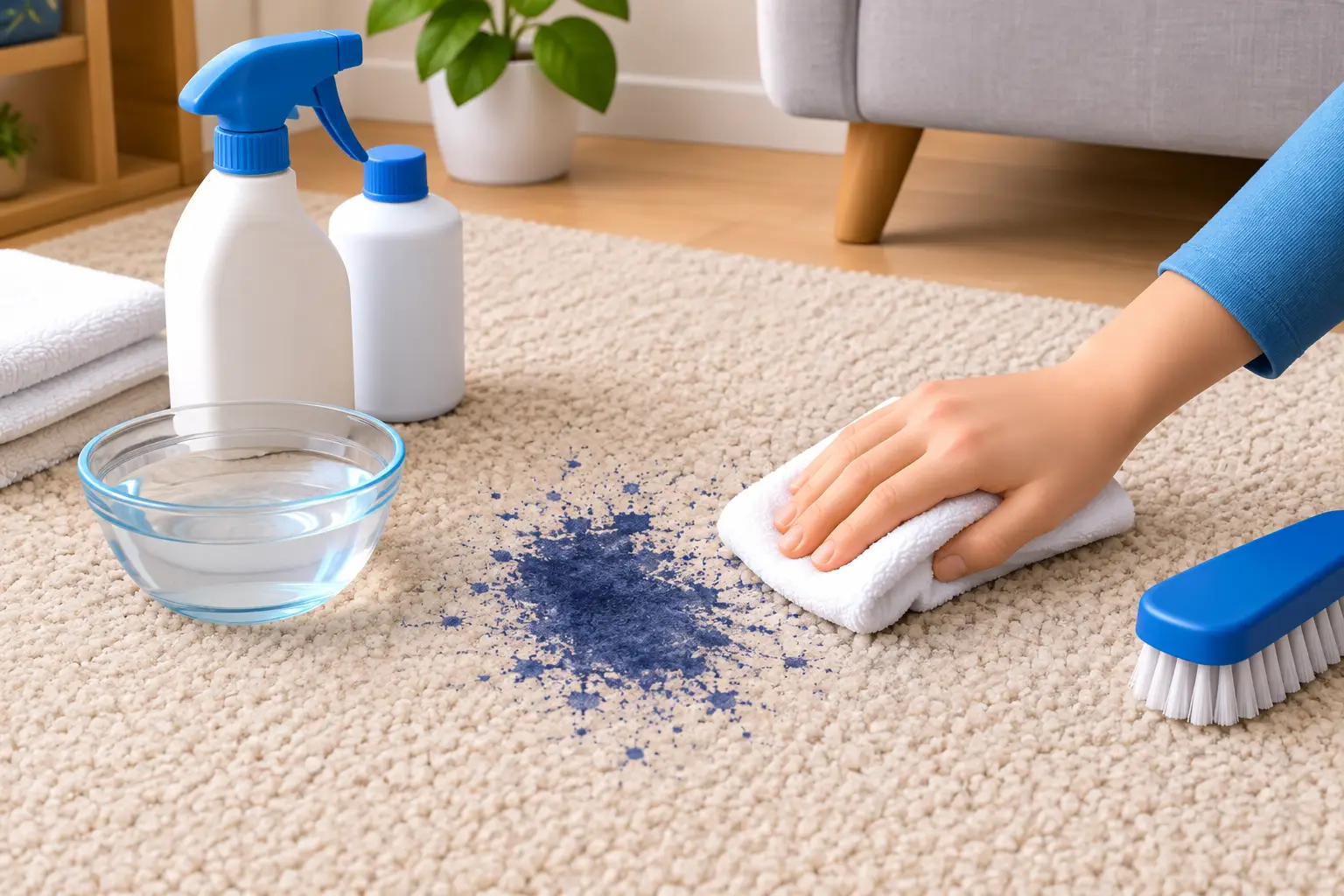
A pen leak can turn a small moment into a stubborn cleaning problem fast. This guide to removing ink stains is designed to help you act carefully before ink spreads deeper into carpet, upholstery, clothing, or a vehicle interior. The goal is not to scrub harder. It is to lift as much dye as possible while protecting the fibers, backing, and color underneath.
Ink stains vary more than most people expect. A fresh ballpoint mark on a synthetic carpet may respond well to a controlled solvent treatment. Permanent marker, gel ink, fountain pen ink, or an older stain that has been rubbed into fabric can require a different approach. The surface matters just as much as the ink.
Start by Identifying the Surface and the Ink
Before reaching for a cleaner, take a moment to assess what happened. Is the stain fresh or dry? Is it a small dot, a pen line, or a larger spill from a broken cartridge? Do you know whether it came from a ballpoint pen, marker, printer cartridge, or gel pen?
Carpet and upholstery are especially sensitive because they are made from many different fiber types. Nylon and polyester often tolerate careful spot treatment better than wool, cotton, silk, rayon, or delicate blends. Leather needs its own approach. On clothing, the care label should guide every decision.
If the item is valuable, light-colored, antique, wool, silk, or already has a previous cleaning attempt around the stain, it is usually safer to stop and have it evaluated. A stain can often be treated. Color loss, browning, or a damaged fabric texture is much harder to correct.
First Steps for Removing Ink Stains
Work from the outside edge of the stain toward the center. This helps prevent the ink from spreading into a larger ring. Place a clean white towel or several white paper towels under a removable fabric item when possible. For carpet and furniture, keep clean white towels on hand to blot the area.
Do not rub. Rubbing pushes ink farther into the fibers and can fray carpet or upholstery. Instead, press gently and lift. Rotate to a clean portion of the towel as ink transfers. A white towel is important because colored towels can bleed dye and make the problem worse.
Avoid soaking the area with water. Ink can travel through wet carpet into the backing and pad, where it becomes more difficult to remove. Too much moisture on upholstery can also create water rings, wick stains back to the surface, or affect the cushion underneath.
Keep these basic rules in mind:
- Blot, do not scrub.
- Use small amounts of solution at a time.
- Test any product in a hidden area first.
- Never mix cleaning products.
- Allow the surface to dry fully before deciding whether the stain is gone.
A Practical Guide to Removing Ink Stains From Carpet
For a fresh ink stain on synthetic carpet, begin by blotting up loose ink with a dry white towel. Once the towel is no longer picking up much ink, lightly apply a small amount of isopropyl alcohol to a clean white cloth, not directly onto the carpet. Blot the stain gently, changing to a clean area of the cloth as the ink transfers.
Alcohol can help dissolve many ballpoint ink formulas, but it is not harmless on every surface. It may affect carpet dyes, backing adhesives, stain protectant, or nearby finishes if overused. Test it first in an inconspicuous spot, especially on patterned, dark, or natural-fiber carpet.
After the ink has lifted as much as possible, blot the area with a separate cloth lightly dampened with plain water. This helps remove cleaning residue. Then use dry towels to absorb remaining moisture. A fan can speed drying and reduce the chance of wicking, which occurs when stain residue rises back to the tips of the carpet fibers as the area dries.
If the stain lightens but does not disappear, resist the urge to repeat the process over and over. Multiple rounds of aggressive spot cleaning can leave a noticeable pale area, crunchy residue, or a larger water spot. At that point, professional treatment is often the better trade-off.
Upholstery Needs a Lighter Touch
Ink on a sofa, dining chair, recliner, or office chair should be treated even more cautiously than carpet. Upholstery fabric can contain unstable dyes, and moisture can move into the cushion where it is difficult to extract. Some fabrics also have cleaning codes that limit which products are appropriate.
Blot fresh ink first. If the manufacturer tag indicates a solvent-safe fabric and you have tested a hidden area, use a barely dampened white cloth with a small amount of isopropyl alcohol. Dab rather than rub, and work slowly. Follow with minimal water only if the fabric tolerates it, then blot dry.
Do not use hair spray, nail polish remover, bleach, or heavy-duty degreasers on upholstered furniture. These popular home remedies can discolor fabric, weaken fibers, leave oily residue, or create a larger visible area than the original ink mark.
Leather furniture is different. Ink may settle into the finish or absorb into damaged leather. Wiping it with alcohol can strip the finish and leave a dull patch. Use a leather cleaner made for the material only when appropriate, or have a professional inspect it before trying stronger products.
Clothing and Washable Fabrics
For washable clothing, place a white towel behind the stain to keep ink from transferring to the other side of the garment. Dab the affected area with a small amount of isopropyl alcohol or a laundry product labeled for ink stains, after checking the care label and testing a hidden seam.
Blot until transfer slows, then rinse according to the garment instructions. Wash the item as directed, but do not place it in the dryer until you are certain the ink is gone. Dryer heat can set remaining dye and make future removal far more difficult.
Delicate materials such as silk, wool, rayon, suede, and dry-clean-only garments should not be treated like a cotton T-shirt. Take them to a qualified cleaner promptly and point out the stain. The sooner they can work on it, the better the chances of improvement.
Ink Stains in Vehicle Interiors
A leaking pen in a car console, fabric seat, floor mat, or door panel deserves the same patient approach. Vehicle upholstery often combines fabric, vinyl, leather, foam, plastic trim, and adhesives in a small area. One harsh product can create a new problem on a nearby surface.
For cloth seats and mats, blot first and use a limited amount of tested cleaning solution on a white towel. Avoid oversaturating seats. Excess moisture can remain in the foam, create odors, and take a long time to dry, particularly if the car is closed in Arizona heat.
For leather or vinyl, use a product intended for that material and avoid strong solvents unless a professional has confirmed they are safe. Ink can be deceptively difficult on light-colored vehicle interiors because it may have already penetrated the protective coating.
When Home Methods Are Not Enough
Professional stain removal is worth considering when ink has been sitting for more than a day or two, has spread across a large area, appears on wool or delicate upholstery, or remains after a careful first attempt. It is also a good choice when the stain is in a highly visible area, such as the center of a living room carpet, a favorite sofa cushion, or the driver’s seat.
A detailed professional assessment looks beyond the spot itself. The ink type, fiber type, prior cleaning attempts, age of the stain, and risk of color loss all affect the treatment plan. Sometimes complete removal is realistic. Other times, the best outcome is significant improvement without compromising the material.
At Specialty Carpet Care, I personally take the time to assess difficult stains rather than treating every surface the same way. Slow is better when the details matter, especially when a quick fix could permanently change the look of your carpet, furniture, or vehicle interior.
If you catch an ink stain early, blot patiently, use as little moisture as possible, and stop before a small mark becomes a larger damage issue. Careful action now gives the surface its best chance of looking right again.