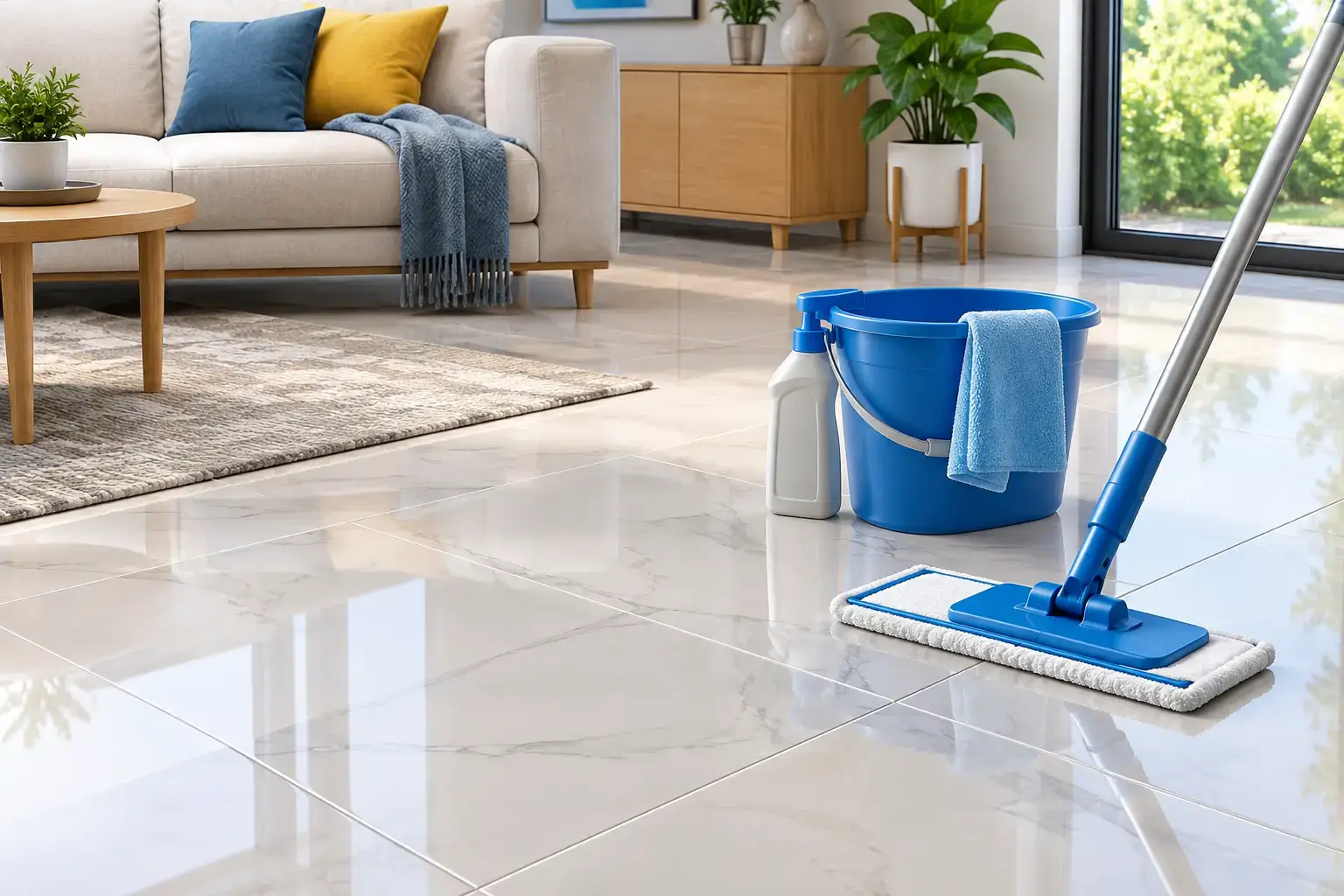
A porcelain tile floor can look nearly new for years, then slowly start to seem dull, streaky, or dirty no matter how often it is mopped. Usually, the tile has not suddenly worn out. It is dealing with residue, hard-water minerals, tracked-in Arizona dust, or grout that has absorbed soil over time. Good porcelain tile care focuses on removing that buildup without leaving more behind.
Porcelain is one of the more durable flooring materials in a home, but durable does not mean maintenance-free. The right routine protects the finish, keeps the floor feeling clean underfoot, and makes it easier to spot when a deeper professional cleaning is worth scheduling.
Why Porcelain Tile Starts Looking Dull
Porcelain itself is dense and generally resistant to moisture and staining. That is good news for busy kitchens, entryways, bathrooms, and homes with pets. The challenge is that the surface can still collect a thin film from cleaning products, body oils, cooking residue, mineral-heavy water, and fine grit brought in from outside.
In Surprise and nearby communities, dust can be a constant factor. Fine sand and dirt settle into textured tile, collect along edges, and get pushed into grout lines. A mop may move some of it around without fully lifting it away. If too much cleaner is used, the leftover product can hold onto more dirt and make the floor look hazy.
Grout often creates the bigger visual problem. Even when the tile surface is clean, darkened grout can make the entire floor appear neglected. Cement-based grout is more porous than porcelain, so it absorbs spills and soil much more easily, especially in high-traffic areas.
A Simple Routine for Porcelain Tile Care
A careful maintenance routine does not need to be complicated. It needs to be consistent and suited to the type of tile in your home.
Start by dry cleaning the floor regularly. Vacuum with a hard-floor setting or sweep with a soft broom before mopping. This step matters because grit is abrasive. When it is left on the floor and rubbed around by shoes, pets, or a mop, it can gradually affect the appearance of polished tile and wear down grout sealers.
For routine mopping, use warm water and a cleaner labeled safe for porcelain or ceramic tile. Follow the dilution instructions instead of adding extra product for a stronger smell or a faster result. More cleaner does not mean a cleaner floor. It often means more residue to rinse away.
Use a clean microfiber mop rather than a sponge mop that may hold dirty water. Change the water when it turns cloudy, and rinse the mop frequently. On larger rooms, working in smaller sections can keep you from spreading soil across the entire floor.
After mopping, allow the floor to dry fully. If streaks are a regular issue, go over the floor once more with clean water or dry it with a fresh microfiber pad. That small extra step can make a noticeable difference on darker or glossy porcelain tile.
Match Your Method to the Tile Finish
Not all porcelain tile should be cleaned exactly the same way. Polished or glossy porcelain shows streaks, water spots, and cleaner residue more easily. It benefits from minimal cleaner, a thorough rinse, and a dry microfiber finish.
Matte and textured porcelain can hide streaks better, but its small grooves may trap dirt. A soft nylon brush can help clean those areas when needed. Use light pressure and avoid aggressive scrubbing that could wear at the grout or leave uneven-looking spots.
Wood-look porcelain also has texture that mimics grain. Clean in the direction of the plank pattern when possible, then rinse well. This helps lift debris from the low areas instead of packing it deeper into the texture.
What to Avoid on Porcelain and Grout
Many tile problems come from well-intentioned cleaning products. Avoid oil soaps, waxes, and products that promise a shine by leaving a coating behind. Porcelain does not need wax, and a coating can turn a clean-looking floor into a slippery, dull one.
Be cautious with harsh acids and strong bleach solutions. They may be marketed for bathrooms or grout, but repeated use can weaken grout, affect colored grout, or create fumes that are unpleasant in enclosed areas. Acidic cleaners are especially risky on natural stone, so if your floor includes stone accents, borders, or thresholds, do not treat the entire area as if it were porcelain.
Steam cleaning depends on the installation and condition of the floor. It may be acceptable for some properly installed porcelain tile, but high heat and moisture can be a poor choice for cracked grout, loose tile, failing caulk, or areas where water could reach the subfloor. Check the flooring and grout manufacturer’s guidance before using steam.
Avoid abrasive powders, steel wool, and stiff wire brushes. They can scratch certain finishes, dull polished surfaces, or damage grout. If you are testing any new cleaner, use it first in an inconspicuous area and look for changes after the area dries.
Give Grout the Attention It Needs
Tile and grout should be cleaned as a system, but they perform differently. Porcelain is typically low-porosity, while grout can hold onto soil, soap residue, cooking splatter, pet accidents, and moisture. A floor can be mopped every week and still have grout lines that continue to darken.
For small spills, wipe them up promptly. In kitchens, pay extra attention near the range, refrigerator, and dining area, where grease and food residue can settle. In bathrooms, clean up standing water and use ventilation to reduce the moisture that encourages buildup along grout and caulk lines.
If your grout is sealed, the sealer needs periodic attention. Sealer does not make grout invincible, but it gives spills more time to be wiped away before they soak in. How often it should be reapplied depends on the grout type, traffic level, cleaning habits, and whether the area gets wet often. A busy family entryway will need more attention than a low-traffic guest bathroom.
Do not assume every dark grout line needs to be bleached. Sometimes it is embedded soil. Sometimes it is staining. Sometimes it is worn or damaged grout that needs repair rather than more cleaning. Identifying the cause first prevents wasted effort and harsh product use.
When Routine Cleaning Is No Longer Enough
There is a point where home cleaning reaches its limit. If the grout still looks dark after careful cleaning, the floor feels sticky soon after mopping, or textured tile has dirt lodged in its surface, a professional deep cleaning can reset the floor.
Professional tile and grout cleaning is particularly useful for larger areas, older floors, rental turnovers, pet-related staining, and high-traffic rooms where soil has built up for months or years. The goal should not be to rush through the job with a one-size-fits-all process. Tile finish, grout condition, past products, and the source of the buildup all affect the right approach.
At Specialty Carpet Care, I personally assess the tile and grout before starting so the cleaning method fits the floor in front of me. Some floors need focused work on grout lines. Others need residue removal and a careful rinse to bring back a more even appearance. Slow is better when the details matter, especially when you want clean results without unnecessary risk to the surface.
A Few Habits That Make Tile Easier to Maintain
Preventing heavy buildup is easier than removing it. Place mats at exterior doors, and clean or shake them out often so they continue trapping dust rather than releasing it indoors. Use felt pads under furniture that gets moved, particularly on smooth tile.
For pet owners, wipe muddy paws before they cross the house and clean accidents promptly. For families, a quick spot clean after a spill is far easier than trying to remove dried residue later. In commercial spaces, regular entryway maintenance makes a major difference because customer-facing tile takes a steady beating from foot traffic.
Your porcelain tile does not need harsh treatment to stay attractive. It needs the right cleaner, clean tools, attention to grout, and enough patience to remove soil instead of simply moving it around. A floor that is cared for consistently will feel better, look brighter, and be much easier to maintain when life gets busy.