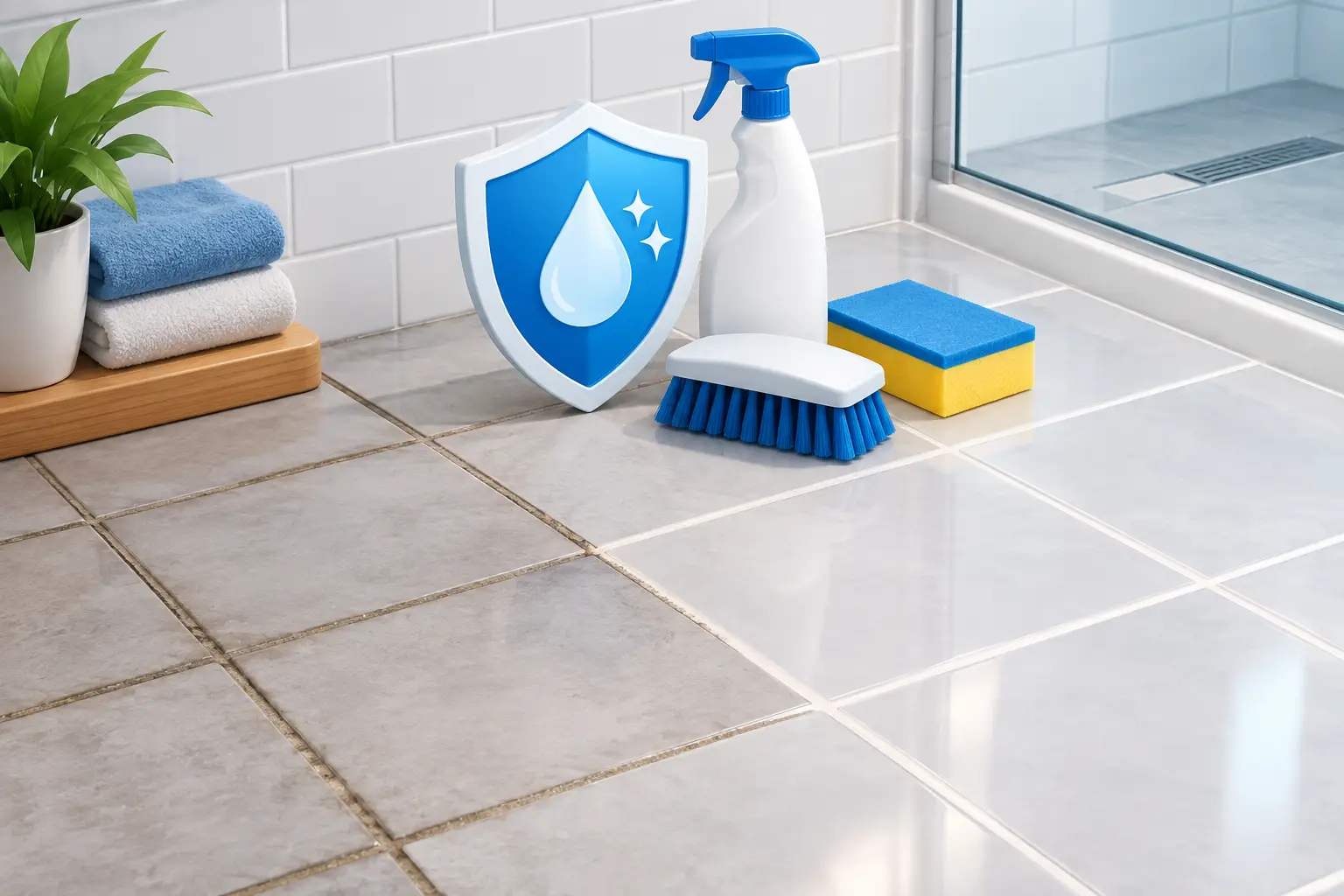
Grout can make an otherwise clean tile floor look tired fast. The best methods preventing grout buildup are not complicated, but they do require consistency: remove loose grit before it gets ground in, keep soap residue from drying on shower walls, manage hard-water minerals, and protect clean grout before stains settle into its pores.
For homeowners in Surprise and surrounding Arizona communities, dust, dry soil, pool traffic, pets, and hard water can all speed up the problem. A quick mop may brighten the tile surface, but it does not always remove what has settled into the grout lines. A little preventive care keeps routine cleaning easier and helps you avoid the deep, uneven discoloration that often calls for professional restoration.
Why Grout Buildup Happens So Quickly
Grout is different from tile. Most tile surfaces are relatively smooth and nonporous, while grout is textured and naturally absorbent unless it has been properly sealed. That texture catches fine dust, cooking residue, tracked-in soil, shampoo, body oils, and minerals from water. In a shower, soap scum and moisture create a different kind of film than what develops on a kitchen floor, but the result is similar: grout begins to look darker, duller, or blotchy.
The cause matters because the wrong cleaning approach can waste time. A dark line near an exterior door is often packed-in soil. White, chalky residue around a shower or sink may be hard-water minerals. Pink, orange, or black discoloration in damp shower corners may involve moisture-related growth. Each needs attention, but they do not all respond to the same cleaner.
There is also a common trap: using too much cleaning product. Heavy mop solution, soap-based cleaners, and products that are not thoroughly rinsed can leave a sticky film behind. That film attracts more dirt, so the floor looks dirty again sooner even though it was just cleaned.
Best Methods for Preventing Grout Buildup at Home
Dry soil removal comes before mopping
On tile floors, regular sweeping or vacuuming is one of the highest-value habits you can build. Fine Arizona dust acts like an abrasive when it is walked across the floor. Once moisture is added, that grit can settle into grout lines and become much harder to remove.
Sweep high-traffic areas several times a week, especially entryways, kitchens, hallways, and pet feeding areas. Use a vacuum setting intended for hard floors so the brush roll does not scatter debris or scratch delicate surfaces. Then mop only after loose grit is gone. Mopping over a dusty floor can turn soil into a thin slurry that dries in the grout.
Entry mats help, but they need to be cleaned too. A mat full of dust can only hold so much before it starts transferring debris back to shoes and paws. Place one outside and one inside busy exterior doors when possible, and shake or vacuum them routinely.
Use less cleaning solution, not more
For regular floor maintenance, use a cleaner made for your particular tile and follow the dilution directions. More product does not mean a cleaner floor. It can leave a residue that captures dirt and makes grout appear dingy.
A damp microfiber mop is usually a better choice than a soaking-wet string mop. Change the water when it turns cloudy, and do a final pass with clean water if the product calls for rinsing. This matters most in kitchens, where cooking grease and food residue can combine with cleaning product film.
Avoid treating every grout line with harsh chemicals. Strong acidic products can damage certain types of tile or grout, and repeated use may weaken grout over time. Bleach can lighten staining in some situations, but it is not a universal grout cleaner and should never be mixed with other products. If you are unsure what your tile is made of, start with a mild, tile-safe option or ask a professional before using an aggressive cleaner.
Control shower moisture and soap residue
Shower grout needs a different routine from floor grout because moisture is the main issue. After showering, run the exhaust fan for at least 20 to 30 minutes. If the bathroom has limited ventilation, leave the door open once privacy allows and make sure wet towels are not keeping the room humid.
A quick squeegee on tile walls is one of the simplest ways to reduce soap scum and mineral deposits. It takes less than a minute and removes the water that would otherwise dry on the grout. For families, keeping a squeegee within reach makes the habit more likely to stick.
Pay attention to bottles and bath mats. Shampoo bottles that sit in the same spot can leave rings of product and moisture at the base of a tiled shower. Lift them occasionally and wipe beneath them. Wash bath mats regularly, especially if they stay damp, because they can transfer oils and moisture to the floor grout.
Address hard water before it turns crusty
Hard water is common in many Arizona homes. As water evaporates, it can leave mineral deposits behind, especially around shower fixtures, along tub edges, and on backsplash grout near sinks. If you see a white or gray haze that returns quickly after cleaning, minerals may be part of the problem.
Wiping tile dry is the first defense. For light mineral residue, use a tile-appropriate cleaner and rinse it away rather than letting product sit on the surface. Be careful with vinegar and other acidic household remedies. They may be fine for some glazed ceramic tile applications, but they can etch natural stone and may not be suitable for every grout or sealant. The material and condition of the surface determine the safe method.
Seal grout after a thorough cleaning
Sealer does not make grout maintenance-free, but it gives spills and soil less opportunity to soak in. This is especially useful in kitchens, bathrooms, entry areas, and any place where children, pets, or frequent foot traffic put extra wear on the floor.
The timing is critical. Sealing dirty grout can lock in discoloration and make later cleaning more difficult. The grout should first be cleaned thoroughly, allowed to dry fully, and checked for cracks or loose areas. Then apply a quality penetrating grout sealer according to its instructions.
How often grout needs resealing depends on traffic, cleaning products, water exposure, and the type of sealer used. A shower may need more attention than a low-traffic guest bathroom. One practical test is to place a few drops of water on a clean grout line. If the water darkens the grout quickly instead of beading for a short time, the sealer may be wearing down.
Habits That Quietly Make Grout Look Worse
Some of the most frustrating buildup comes from habits that seem harmless. Leaving spills until later gives pigments, grease, and moisture time to settle in. Using a dirty mop head simply redistributes soil. Spraying cleaner and walking away can let residue dry on tile. Scrubbing with overly abrasive tools may roughen grout and make it more likely to hold dirt in the future.
Steam cleaning can be helpful in the right setting, but it is not always the answer. Heat and moisture may be unsuitable for damaged grout, loose tile, or surfaces with failing sealant. Likewise, a stiff grout brush is useful for occasional targeted cleaning, but hard scrubbing every week can wear on the surface. Gentle, frequent maintenance usually works better than repeated heavy cleaning.
When Routine Care Is No Longer Enough
If grout remains dark after normal cleaning, looks uneven from room to room, or has buildup that returns almost immediately, the soil may be embedded below the surface. This is common in older floors, busy family homes, rental turnovers, restaurants, and showers with years of soap and mineral accumulation.
Professional tile and grout cleaning uses equipment and solutions selected for the actual condition of the surface, not a one-size-fits-all approach. The goal is to lift embedded soil while treating the tile and grout with care. It can also be the right time to assess whether sealing, grout repair, or a change in maintenance products would make sense.
At Specialty Carpet Care, I personally take the time to assess what is causing the discoloration before recommending a treatment. Slow is better when the details matter, especially when the difference between surface dirt and deep buildup affects the result.
Clean grout is easier to keep clean than neglected grout. Start with dry soil removal, light but regular washing, good shower ventilation, and sealing after a proper deep clean. If the grout has reached the point where household efforts are no longer changing it, getting it professionally cleaned can give you a cleaner starting point and a maintenance routine that feels manageable again.